
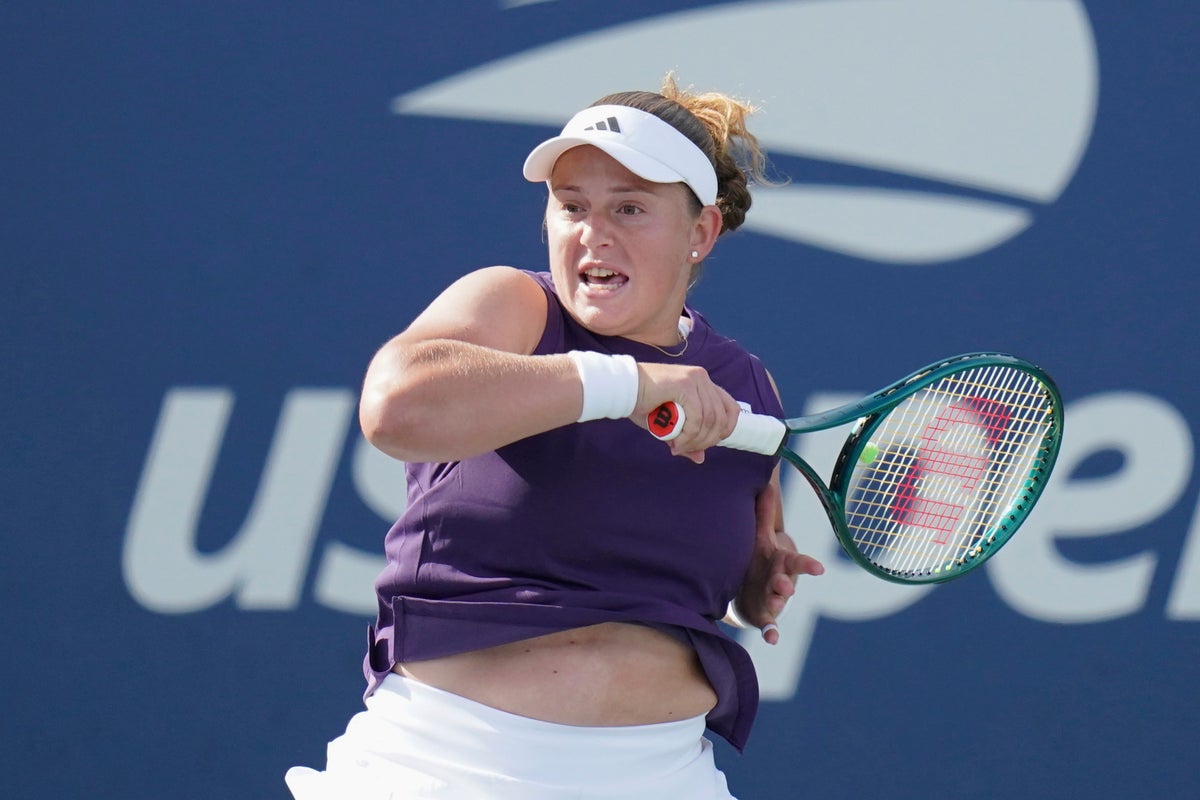
Jelena Ostapenko Apologizes to Taylor Townsend After US Open Clash
Jelena Ostapenko has issued an apology following a heated exchange with Taylor Townsend at the US Open.The apology comes after Ostapenko’s controversial remarks during and after their second-round match, which sparked claims of racism [[1](https://edition.cnn.com/2025/08/30/sport/jelena-ostapenko-apologizes-taylor-townsend)].
Fiery Match Ends with Accusations and Apology
The controversy erupted after Ostapenko lost to Townsend at Flushing Meadows. She reacted with anger, directing accusations at Townsend, including comments about her having ”no education” and “no class.” Ostapenko’s frustration stemmed from Townsend’s failure to apologize for a net cord during the match.
Osaka Weighs In, Citing Sensitivity
Naomi Osaka commented on the situation, stating that the “education” remark was notably offensive, especially to a Black tennis player in a predominantly white sport.
Ostapenko Addresses the Controversy
Initially, Ostapenko defended her actions on social media, denying any racist intent. She later released a further statement on Instagram, apologizing for her behavior. “I wanted to apologize for some of the things I said during my second-round singles match,” she wrote.
Ostapenko attributed her choice of words to English not being her first language,explaining that she intended to address tennis etiquette but recognized that her words caused offense. “English is not my native language so when I said education, I was speaking only about what I believe as tennis etiquette, but I understand how the words I used could have offended many people beyond the tennis court,” she stated.
She added, “I appreciate the support as I continue to learn and grow as a person and a tennis player. Goodbye New York and I look forward to being back next year.”
Townsend Responds to Apology, Focuses on Positive Message
Townsend, who leveraged the controversy as inspiration for a subsequent victory against Mirra Andreeva, acknowledged the apology. “That’s nice that she did that, that she apologised,” Townsend said. “That’s fine. That’s cool. At the end of the day, I think that it’s a learning lesson for her.”
Townsend highlighted the importance of self-awareness and avoiding the imposition of personal expectations on others. “Like I said when everything first happened, you cannot push your expectations on other people. That’s ultimately what happened. She expected for me to react a certain type of way, and I didn’t, and it infuriated her,” she stated.
Townsend added that Ostapenko’s actions were “hurtful, belligerent, that are offensive, not only to me, but to the sport and to a whole culture of people that I try to do my best to represent the best that I can.” She hopes Ostapenko learns “you can’t control people and it’s better just to focus on yourself.”
Why did Naomi Osaka feel compelled to comment on the exchange between Ostapenko and Townsend?
Jelena Ostapenko Apologizes to taylor Townsend After US Open Clash
jelena Ostapenko has issued an apology following a heated exchange with Taylor Townsend at the US Open.the apology comes after Ostapenko’s controversial remarks during and after their second-round match, which sparked claims of racism [[1](https://edition.cnn.com/2025/08/30/sport/jelena-ostapenko-apologizes-taylor-townsend)].
fiery match Ends with Accusations and Apology
The controversy erupted after Ostapenko lost to Townsend at Flushing meadows.She reacted with anger, directing accusations at Townsend, including comments about her having “no education” and “no class.” Ostapenko’s frustration stemmed from Townsend’s failure to apologize for a net cord during the match.
Osaka Weighs In, Citing Sensitivity
Naomi Osaka commented on the situation, stating that the “education” remark was notably offensive, especially to a Black tennis player in a predominantly white sport.
Ostapenko Addresses the Controversy
Initially, Ostapenko defended her actions on social media, denying any racist intent. She later released a further statement on Instagram, apologizing for her behavior. ”I wanted to apologize for some of the things I said during my second-round singles match,” she wrote.
Ostapenko attributed her choice of words to English not being her first language, explaining that she intended to address tennis etiquette but recognized that her words caused offense. “English is not my native language so when I said education, I was speaking only about what I believe as tennis etiquette, but I understand how the words I used could have offended many people beyond the tennis court,” she stated.
She added, “I appreciate the support as I continue to learn and grow as a person and a tennis player. Goodbye New York and I look forward to being back next year.”
Townsend Responds to Apology, Focuses on Positive Message
Townsend, who leveraged the controversy as inspiration for a subsequent victory against Mirra Andreeva, acknowledged the apology. ”That’s nice that she did that, that she apologised,” Townsend said. “That’s fine. That’s cool. Ultimately, I think that it’s a learning lesson for her.”
Townsend highlighted the importance of self-awareness and avoiding the imposition of personal expectations on others. “Like I said when everything first happened, you cannot push your expectations on other people. That’s ultimately what happened. She expected for me to react a certain type of way, and I didn’t, and it infuriated her,” she stated.
Townsend added that Ostapenko’s actions were “hurtful, belligerent, that are offensive, not only to me, but to the sport and to a whole culture of people that I try to do my best to represent the best that I can.” She hopes Ostapenko learns “you can’t control people and it’s better just to focus on yourself.”
Q&A: Unpacking the Ostapenko-Townsend US Open Incident
Here’s a closer look at the controversy surrounding Jelena Ostapenko and Taylor Townsend’s US Open match, breaking down the key issues and offering insights.
What exactly happened between Ostapenko and Townsend?
After losing to Taylor Townsend in the second round of the US Open, Jelena ostapenko made several critical comments about Townsend, including saying she had “no class” and “no education” [[1](https://www.bbc.com/sport/tennis/articles/c87ev17en4yo)].Ostapenko’s frustration stemmed from Townsend not apologizing for a net cord during the match.
Why did these comments cause such a stir?
The remarks were perceived as offensive, notably the comment about “education,” which was seen as insensitive, especially given the racial dynamics within the sport. Naomi Osaka also weighed in on this situation, stating that the ”education” remark was notably offensive, particularly to a Black tennis player in a predominantly white sport.
How did Ostapenko respond to the backlash?
Initially, Ostapenko defended her actions. However, she later apologized on Instagram, attributing her choice of words to English not being her native language and stating she was referring to tennis etiquette. She acknowledged that her words caused offense.
How did Townsend react to Ostapenko’s apology?
Townsend acknowledged the apology and framed the situation as a “learning lesson” for Ostapenko, emphasizing the importance of not imposing personal expectations on others.
What’s the key takeaway from this incident?
The incident highlights the importance of sportsmanship, cultural sensitivity, and the power of language, especially in a global environment like professional tennis. It also underscores the need for athletes to be aware of how their words can impact others.
Stay informed and engaged with the sport. This incident serves as a reminder of how importent respect and understanding are in competitive environments.

